Buy lincolnclub.eu ?
We are moving the project
lincolnclub.eu .
Are you interested in purchasing the domain
lincolnclub.eu ?
domain@kv-gmbh.de · 0541-91531010
Buy lincolnclub.eu ?
What causes earthquakes?
Earthquakes are caused by the sudden release of energy in the Earth's crust. This release of energy is typically the result of the movement of tectonic plates, which are large sections of the Earth's crust that float on the semi-fluid asthenosphere beneath them. When these plates move past each other, they can become stuck and then suddenly release, causing seismic waves to propagate through the Earth, resulting in an earthquake. Other causes of earthquakes can include volcanic activity, landslides, and human activities such as mining or reservoir-induced seismicity. **
How do earthquakes occur?
Earthquakes occur when there is a sudden release of energy in the Earth's crust, typically caused by the movement of tectonic plates. The Earth's crust is made up of several large plates that float on the semi-fluid mantle beneath them. When these plates shift or collide, they can create stress and pressure that eventually leads to an earthquake. The release of this energy sends seismic waves through the Earth, causing the ground to shake. **

Similar search terms for Earthquakes
Top-Angebote
Products related to Earthquakes:
-
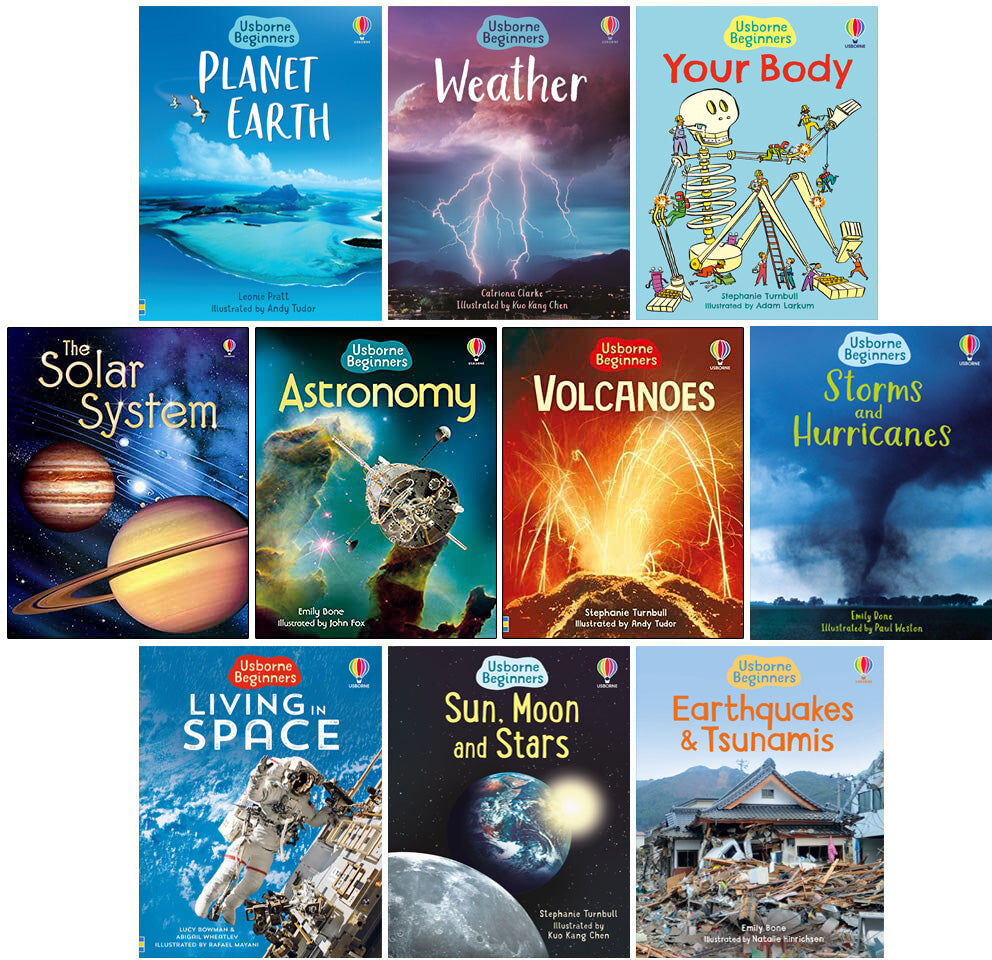
Usborne Beginners Science Series – 10 Book Classroom Set Primary School STEM & Nonfiction Learning Books (Includes Earthquakes & Tsunamis)Inspire curiosity and a love of learning with the Usborne Beginners Science Series – 10 Books Collection Set, created by Usborne. This engaging educational collection introduces young readers to fascinating science topics through clear explanations, vivid illustrations, and easy-to-read text. Covering subjects such as Earthquakes and Tsunamis, nature, space, and the world around us, these books make complex ideas accessible and exciting. Designed for independent readers and classroom use, the Usborne Beginners series supports early STEM learning, reading confidence, and general knowledge development. Why Parents & Teachers Love This Collection: 10 engaging science books for children Covers key topics including Earthquakes & Tsunamis Easy-to-read format ideal for beginners Bright illustrations and simple explanations Perfect for ages 6–10 and early learners A fantastic introduction to science, the Usborne Beginners Collection helps children explore, question, and understand the world around them. Earthquakes and Tsunamis This is a fantastic addition to the popular Beginners series, providing an informative introduction to the fascinating world of earthquakes for young readers. There are clear explanations of the science behind different types of earthquakes and their effects, including tsunamis and landslides. This title features real-life earthquakes, and describes how people are kept safe and rescued when disaster strikes. Striking colour photographs and step-by-step illustrations engage readers with the subject matter. This title is developed with a reading expert from Roehampton University to help young readers grow in confidence. Sun Moon and Stars What is the Sun made of? How did astronauts get to the Moon and what did they find there? For children beginning to read on their own, this book is an exciting introduction to space. Includes vivid, full colour illustrations and photographs on every page, and easy-to-read text specially written with the help of a reading expert Living in Space How do astronauts travel into space? Where do they live when they get there? What do they do all day? In this book you'll find the answers and lots more amazing facts about living in space. This non-fiction series aims to encourage children to access the wonder of the world around them. The easy-to-read text has been specially written with the help of a reading expert Storms and Hurricanes How do astronauts travel into space? Where do they live when they get there? What do they do all day? In this book you'll find the answers and lots more amazing facts about living in space. This non-fiction series aims to encourage children to access the wonder of the world around them. The easy-to-read text has been specially written with the help of a reading expert Volcanoes An introduction to earthquakes and volcanoes. The sensational images combine with lively text, amazing facts, diagrams and a comprehensive glossary Astronomy A straightforward book telling...17,99 £*Shipping: 2,99 £Secure redirect to the provider
-
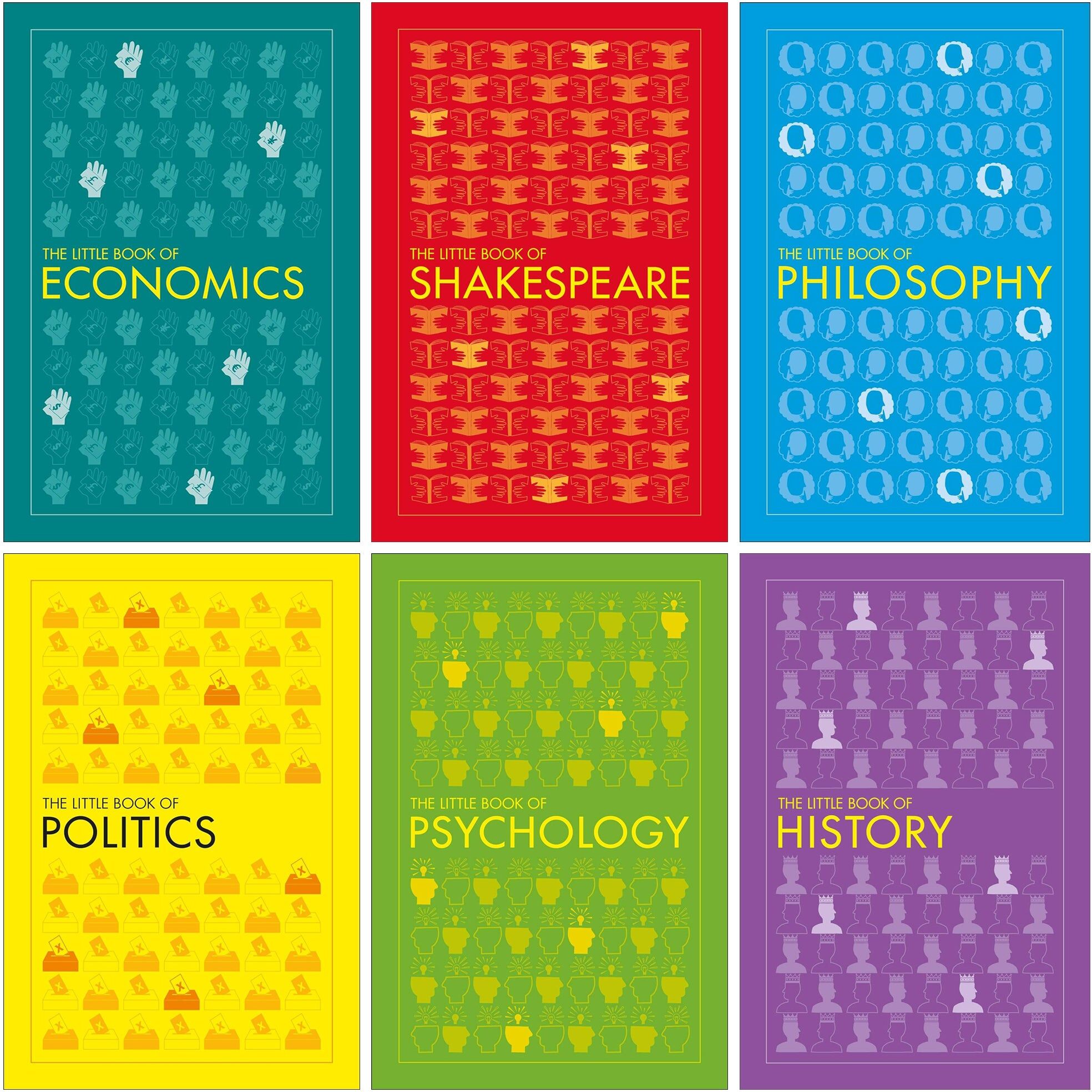
DK The Little Book Of Series 6 Books Collection Set (Economics, Politics, Shakespeare, Philosophy, Psychology, History)The Little Book Of Economics From the earliest forms of currency to the Industrial Revolution, and from the birth of the stock market to free-market capitalism and globalized trade, The Little Book of Economics brings economic theory and the work of key economists to life. Journeying through centuries of economic thought, it is the perfect pocket-sized guide to the subject. The Little Book Of Politics From the origins of democracy to Machiavelli's cunning statecraft, and from Rousseau's "social contract" to the American Declaration of Independence, Marxist communism, the dawn of populism, and identity politics, The Little Book of Politics examines the philosophies behind the different political beliefs and methods of government used around the world over the course of human history. The Little Book Of Shakespeare This bold book covers every work, from the comedies of Twelfth Night and As You Like It to the tragedies of Julius Caesar and Hamlet, plus lost plays and less well-known works of poetry. Easy-to-understand graphics and illustrations bring the themes, plots, characters and language of Shakespeare to life, including illustrated timelines which offer an at-a-glance summary of the action for each play. With detailed plot summaries and an in-depth analysis of the major characters and themes, this is a brilliant, innovative exploration of the entire canon of Shakespeare plays, sonnets and poetry. The Little Book Of Philosophy To the complete novice learning about philosophy can be daunting - The Little Book of Philosophy changes all that. With the use of powerful and easy-to-follow images, famous quotations, and explanations that are easily understandable, this book cuts through any misunderstandings to demystify the subject. The Little Book Of Psychology DK's The Little Book of Psychology answers all these questions and provides an insight into this fascinating field of science. Whether you are a student, an expert, a novice, or have a general interest in the human mind, this portable guide is the perfect choice to start exploring and understanding psychology. The Little Book Of History The Little Book of History charts world history from the dawn of civilisation to the modern culture we live in today. From the origins of homo-sapiens to the release of Nelson Mandela, from the French Revolution to the Space Race, The Little Book of History is a stunning exploration of the human timeline up to and including modern Islam, the world wide web, and the global financial crisis.14,99 £*Shipping: 2,99 £Secure redirect to the provider
-
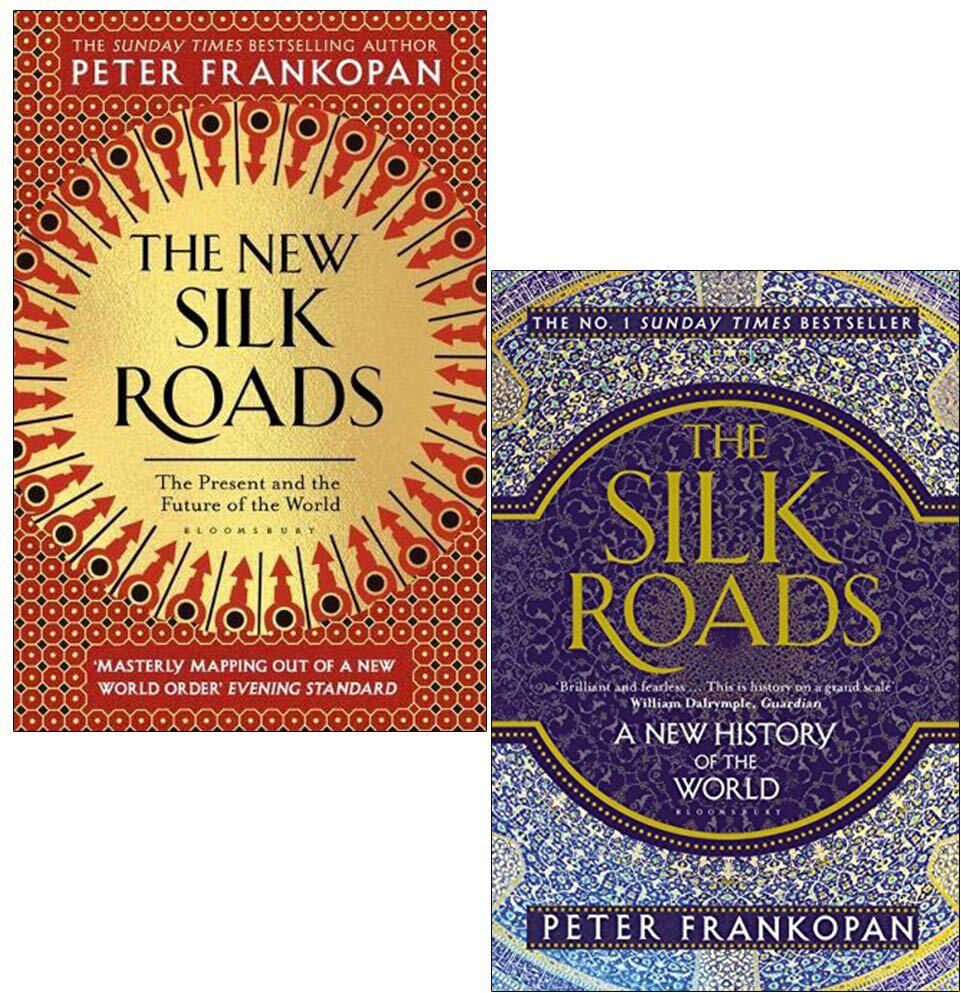
Bloomsbury Publishing The Silk Roads & The New Silk Roads 2 Book Set by Peter Frankopan – History & Global Politics CollectionThe New Silk Roads The Present and Future of the World The New Silk Roads takes a fresh look at the relationships being formed along the length and breadth of the ancient trade routes today. The world is changing dramatically and in an age of Brexit and Trump; the themes of isolation and fragmentation permeating the western world stand in sharp contrast to events along the Silk Roads; where ties are being strengthened and mutual cooperation established.This prescient contemporary history provides a timely reminder that we live in a world that is profoundly interconnected. The Silk Roads: A New History of the World For centuries; fame and fortune were to be found in the west in the New World of the Americas. Today; it is the east which calls out to those in search of riches and adventure. Sweeping right across Central Asia and deep into China and India; a region that once took centre stage is again rising to dominate global politics; commerce and culture.16,98 £*Shipping: 2,99 £Secure redirect to the provider


-
Do earthquakes make noise?
Yes, earthquakes can make noise. The noise is typically caused by the movement of the Earth's crust and the release of energy along the fault lines. This can result in a variety of sounds, including rumbling, cracking, and even roaring. However, the noise from an earthquake may not always be audible to humans, especially if the earthquake is deep underground or if the epicenter is far away. **
-
Are there earthquakes in Germany?
Yes, Germany does experience earthquakes, but they are relatively rare and usually of low to moderate magnitude. The most seismically active areas in Germany are in the southwest, near the border with France, and in the southeast, near the border with the Czech Republic. While the frequency and intensity of earthquakes in Germany are not as high as in some other regions of the world, the country does have a history of seismic activity. **
-
Can artificial earthquakes be created nowadays?
Yes, artificial earthquakes can be created nowadays through a process known as induced seismicity. This can occur as a result of human activities such as mining, reservoir-induced seismicity from filling large reservoirs, or hydraulic fracturing (fracking) for oil and gas extraction. While these induced earthquakes are typically smaller in magnitude than natural earthquakes, they can still pose risks to infrastructure and communities in the affected areas. Efforts are being made to better understand and mitigate the risks associated with induced seismicity. **
-
Were there tsunamis after the earthquakes?
Yes, tsunamis were triggered by the earthquakes. The seismic activity caused the displacement of large volumes of water, resulting in powerful and destructive tsunamis that struck coastal areas. The combination of the earthquakes and subsequent tsunamis led to widespread devastation and loss of life in the affected regions. **

Why are there earthquakes in Turkey?
Turkey is located on the boundary of the Eurasian and African tectonic plates, making it a seismically active region. The collision of these two plates causes frequent earthquakes as the Earth's crust shifts and releases energy. Additionally, Turkey is part of the Mediterranean region, which is known for its complex tectonic activity, further contributing to the occurrence of earthquakes in the country. The combination of these geological factors makes Turkey prone to experiencing earthquakes. **
Is there really earthquakes in Germany?
Yes, Germany does experience earthquakes, although they are relatively rare and usually of low to moderate magnitude. The most seismically active areas in Germany are in the southwest, near the border with France, and in the southeast, near the border with the Czech Republic. While the frequency and intensity of earthquakes in Germany are not as high as in some other regions of the world, the country does have a history of seismic activity. **
Top-Angebote
Products related to Earthquakes:
-
Usborne Beginners Science 10 Book Collection Earthquakes & Tsunamis - Ages 5-7 - PaperbackTitles in this set: Earthquakes & Tsunamis Sun Moon and Stars Living in Space Storms and Hurricanes Volcanoes Astronomy The Solar System Your Body Planet Earth Weather Earthquakes & Tsunamis This is a fantastic addition to the popular Beginners series, providing an informative introduction to the fascinating world of earthquakes for young readers. There are clear explanations of the science behind different types of earthquakes and their effects, including tsunamis and landslides. This title features real-life earthquakes, and describes how people are kept safe and rescued when disaster strikes. Striking colour photographs and step-by-step illustrations engage readers with the subject matter. This title is developed with a reading expert from Roehampton University to help young readers grow in confidence Sun, Moon and Stars What is the Sun made of? How did astronauts get to the Moon and what did they find there? For children beginning to read on their own, this book is an exciting introduction to space. Includes vivid, full colour illustrations and photographs on every page, and easy-to-read text specially written with the help of a reading expert Living in Space How do astronauts travel into space? Where do they live when they get there? What do they do all day? In this book you'll find the answers and lots more amazing facts about living in space. This non-fiction series aims to encourage children to access the wonder of the world around them. The easy-to-read text has been specially written with the help of a reading expert Storms and Hurricanes How do astronauts travel into space? Where do they live when they get there? What do they do all day? In this book you'll find the answers and lots more amazing facts about living in space. This non-fiction series aims to encourage children to access the wonder of the world around them. The easy-to-read text has been specially written with the help of a reading expert Volcanoes Did you know that somewhere in the world a volcano is erupting right now? In this fascinating book you can read about amazing eruptions and find out about fiery lava rivers, deadly ash clouds, steaming springs and much more. Astronomy A straightforward book telling you all a beginner needs to know about the planets, stars, moons, nebulae, galaxies, asteroids and more, through easy-to-read text, full-colour photographs and step-by-step visual explanations. Recommended websites accessed via Usborne Quicklinks provide further online resources. The Solar System What is the surface of Mars like? Why does Venus glow in the dark? How do scientists explore faraway planets? Beginner readers can find answers to these questions and more in this colourful information book. Your Body Have you ever wondered what's inside you? Take a tour around your amazing body and find out what your heart and lungs do, how you see and hear, where food goes and lots more. Planet Earth What makes planet Earth so special? It's the only planet to have anything...12,99 £*Shipping: 2,99 £Secure redirect to the provider
-
Usborne Beginners Series Science 10 Books Set Children’s Educational Books (Includes Earthquakes & Tsunamis) - NEW HARDCOVERUsborne - Beginner's Science Collection - 10 Books Set Inspire curiosity and a love of learning with the Usborne Beginners Science Series – 10 Books Collection Set, created by Usborne. This engaging educational collection introduces young readers to fascinating science topics through clear explanations, vivid illustrations, and easy-to-read text. Covering subjects such as Earthquakes and Tsunamis, nature, space, and the world around us, these books make complex ideas accessible and exciting. Designed for independent readers and classroom use, the Usborne Beginners series supports early STEM learning, reading confidence, and general knowledge development. Why Parents & Teachers Love This Collection: 10 engaging science books for children Covers key topics including Earthquakes & Tsunamis Easy-to-read format ideal for beginners Bright illustrations and simple explanations Perfect for ages 6–10 and early learners A fantastic introduction to science, the Usborne Beginners Collection helps children explore, question, and understand the world around them. Earthquakes and Tsunamis This is a fantastic addition to the popular Beginners series, providing an informative introduction to the fascinating world of earthquakes for young readers. There are clear explanations of the science behind different types of earthquakes and their effects, including tsunamis and landslides. This title features real-life earthquakes, and describes how people are kept safe and rescued when disaster strikes. Striking colour photographs and step-by-step illustrations engage readers with the subject matter. This title is developed with a reading expert from Roehampton University to help young readers grow in confidence. Sun Moon and Stars What is the Sun made of? How did astronauts get to the Moon and what did they find there? For children beginning to read on their own, this book is an exciting introduction to space. Includes vivid, full colour illustrations and photographs on every page, and easy-to-read text specially written with the help of a reading expert Living in Space How do astronauts travel into space? Where do they live when they get there? What do they do all day? In this book you'll find the answers and lots more amazing facts about living in space. This non-fiction series aims to encourage children to access the wonder of the world around them. The easy-to-read text has been specially written with the help of a reading expert Storms and Hurricanes How do astronauts travel into space? Where do they live when they get there? What do they do all day? In this book you'll find the answers and lots more amazing facts about living in space. This non-fiction series aims to encourage children to access the wonder of the world around them. The easy-to-read text has been specially written with the help of a reading expert Volcanoes An introduction to earthquakes and volcanoes. The sensational images combine with lively text, amazing facts, diagrams and a...17,99 £*Shipping: 2,99 £Secure redirect to the provider
-
Usborne Beginners Science Series – 10 Book Classroom Set Primary School STEM & Nonfiction Learning Books (Includes Earthquakes & Tsunamis)Inspire curiosity and a love of learning with the Usborne Beginners Science Series – 10 Books Collection Set, created by Usborne. This engaging educational collection introduces young readers to fascinating science topics through clear explanations, vivid illustrations, and easy-to-read text. Covering subjects such as Earthquakes and Tsunamis, nature, space, and the world around us, these books make complex ideas accessible and exciting. Designed for independent readers and classroom use, the Usborne Beginners series supports early STEM learning, reading confidence, and general knowledge development. Why Parents & Teachers Love This Collection: 10 engaging science books for children Covers key topics including Earthquakes & Tsunamis Easy-to-read format ideal for beginners Bright illustrations and simple explanations Perfect for ages 6–10 and early learners A fantastic introduction to science, the Usborne Beginners Collection helps children explore, question, and understand the world around them. Earthquakes and Tsunamis This is a fantastic addition to the popular Beginners series, providing an informative introduction to the fascinating world of earthquakes for young readers. There are clear explanations of the science behind different types of earthquakes and their effects, including tsunamis and landslides. This title features real-life earthquakes, and describes how people are kept safe and rescued when disaster strikes. Striking colour photographs and step-by-step illustrations engage readers with the subject matter. This title is developed with a reading expert from Roehampton University to help young readers grow in confidence. Sun Moon and Stars What is the Sun made of? How did astronauts get to the Moon and what did they find there? For children beginning to read on their own, this book is an exciting introduction to space. Includes vivid, full colour illustrations and photographs on every page, and easy-to-read text specially written with the help of a reading expert Living in Space How do astronauts travel into space? Where do they live when they get there? What do they do all day? In this book you'll find the answers and lots more amazing facts about living in space. This non-fiction series aims to encourage children to access the wonder of the world around them. The easy-to-read text has been specially written with the help of a reading expert Storms and Hurricanes How do astronauts travel into space? Where do they live when they get there? What do they do all day? In this book you'll find the answers and lots more amazing facts about living in space. This non-fiction series aims to encourage children to access the wonder of the world around them. The easy-to-read text has been specially written with the help of a reading expert Volcanoes An introduction to earthquakes and volcanoes. The sensational images combine with lively text, amazing facts, diagrams and a comprehensive glossary Astronomy A straightforward book telling...17,99 £*Shipping: 2,99 £Secure redirect to the provider
-
DK The Little Book Of Series 6 Books Collection Set (Economics, Politics, Shakespeare, Philosophy, Psychology, History)The Little Book Of Economics From the earliest forms of currency to the Industrial Revolution, and from the birth of the stock market to free-market capitalism and globalized trade, The Little Book of Economics brings economic theory and the work of key economists to life. Journeying through centuries of economic thought, it is the perfect pocket-sized guide to the subject. The Little Book Of Politics From the origins of democracy to Machiavelli's cunning statecraft, and from Rousseau's "social contract" to the American Declaration of Independence, Marxist communism, the dawn of populism, and identity politics, The Little Book of Politics examines the philosophies behind the different political beliefs and methods of government used around the world over the course of human history. The Little Book Of Shakespeare This bold book covers every work, from the comedies of Twelfth Night and As You Like It to the tragedies of Julius Caesar and Hamlet, plus lost plays and less well-known works of poetry. Easy-to-understand graphics and illustrations bring the themes, plots, characters and language of Shakespeare to life, including illustrated timelines which offer an at-a-glance summary of the action for each play. With detailed plot summaries and an in-depth analysis of the major characters and themes, this is a brilliant, innovative exploration of the entire canon of Shakespeare plays, sonnets and poetry. The Little Book Of Philosophy To the complete novice learning about philosophy can be daunting - The Little Book of Philosophy changes all that. With the use of powerful and easy-to-follow images, famous quotations, and explanations that are easily understandable, this book cuts through any misunderstandings to demystify the subject. The Little Book Of Psychology DK's The Little Book of Psychology answers all these questions and provides an insight into this fascinating field of science. Whether you are a student, an expert, a novice, or have a general interest in the human mind, this portable guide is the perfect choice to start exploring and understanding psychology. The Little Book Of History The Little Book of History charts world history from the dawn of civilisation to the modern culture we live in today. From the origins of homo-sapiens to the release of Nelson Mandela, from the French Revolution to the Space Race, The Little Book of History is a stunning exploration of the human timeline up to and including modern Islam, the world wide web, and the global financial crisis.14,99 £*Shipping: 2,99 £Secure redirect to the provider
-
What causes earthquakes?
Earthquakes are caused by the sudden release of energy in the Earth's crust. This release of energy is typically the result of the movement of tectonic plates, which are large sections of the Earth's crust that float on the semi-fluid asthenosphere beneath them. When these plates move past each other, they can become stuck and then suddenly release, causing seismic waves to propagate through the Earth, resulting in an earthquake. Other causes of earthquakes can include volcanic activity, landslides, and human activities such as mining or reservoir-induced seismicity. **
-
How do earthquakes occur?
Earthquakes occur when there is a sudden release of energy in the Earth's crust, typically caused by the movement of tectonic plates. The Earth's crust is made up of several large plates that float on the semi-fluid mantle beneath them. When these plates shift or collide, they can create stress and pressure that eventually leads to an earthquake. The release of this energy sends seismic waves through the Earth, causing the ground to shake. **
-
Do earthquakes make noise?
Yes, earthquakes can make noise. The noise is typically caused by the movement of the Earth's crust and the release of energy along the fault lines. This can result in a variety of sounds, including rumbling, cracking, and even roaring. However, the noise from an earthquake may not always be audible to humans, especially if the earthquake is deep underground or if the epicenter is far away. **
-
Are there earthquakes in Germany?
Yes, Germany does experience earthquakes, but they are relatively rare and usually of low to moderate magnitude. The most seismically active areas in Germany are in the southwest, near the border with France, and in the southeast, near the border with the Czech Republic. While the frequency and intensity of earthquakes in Germany are not as high as in some other regions of the world, the country does have a history of seismic activity. **
Similar search terms for Earthquakes
-
Bloomsbury Publishing The Silk Roads & The New Silk Roads 2 Book Set by Peter Frankopan – History & Global Politics CollectionThe New Silk Roads The Present and Future of the World The New Silk Roads takes a fresh look at the relationships being formed along the length and breadth of the ancient trade routes today. The world is changing dramatically and in an age of Brexit and Trump; the themes of isolation and fragmentation permeating the western world stand in sharp contrast to events along the Silk Roads; where ties are being strengthened and mutual cooperation established.This prescient contemporary history provides a timely reminder that we live in a world that is profoundly interconnected. The Silk Roads: A New History of the World For centuries; fame and fortune were to be found in the west in the New World of the Americas. Today; it is the east which calls out to those in search of riches and adventure. Sweeping right across Central Asia and deep into China and India; a region that once took centre stage is again rising to dominate global politics; commerce and culture.16,98 £*Shipping: 2,99 £Secure redirect to the provider
-
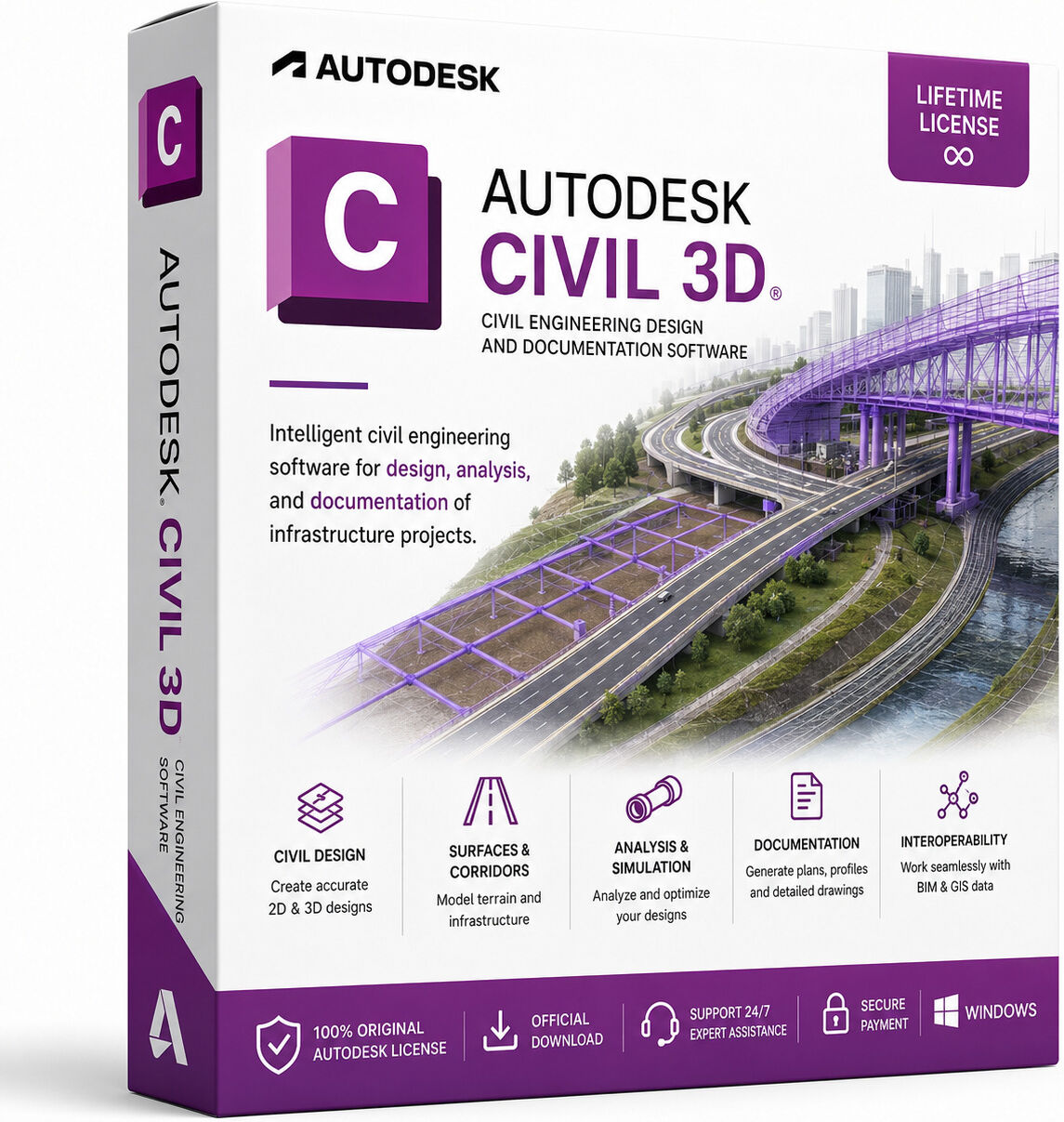
AUTODESK CIVIL 3D 2025AUTODESK CIVIL 3D LICENSE Original and guaranteed by Nextdigitalkey.com Civil 3D ® design software empowers civil engineers to realize tomorrow’s infrastructure, today. Work with a model-based environment for better design decisions and project quality. civil 3D Streamline documentation with a design-driven approach to plans production. Harness the power of BIM (Building Information Modeling) for greater design coordination and project collaboration. What’s new in Civil 3D 2023: Grading Optimization Help Center Pressure networks keyword search Corridor solid property set and targeting Rail switch and crossing enhancements Project Explorer table, report, and object comparison License Complete with all Autodesk Civil 3D functionalities. LANGUAGE: MULTI-LANGUAGE NUMBER OF DEVICES: 1 OPERATING SYSTEM: WINDOWS 10 / WINDOWS 11 LICENSE DURATION: PERPETUAL (No expiry) WHAT DO I RECEIVE WHEN I PURCHASE? By purchasing this product, you will receive the digital software to download and install, the product key for activation, and all instructions for a proper installation. DO I DOWNLOAD THE PRODUCT FROM THE OFFICIAL WEBSITE? Certainly, the product download takes place from the official website, no external links are used, only official links. HOW DO LICENSES HAVE A LOW PRICE? they are used and disused retail licenses from the previous owner in accordance with ECJ C-128/2011 ruling, it is possible to purchase them from us at the best price on the market. Our licenses are digitally delivered via email within a few minutes of payment, they are digital ESD licenses, and all product keys are original and can be reinstalled on the same device. ARE YOU AFRAID YOU WON'T BE ABLE TO INSTALL IT? No problem! We provide direct assistance with remote support available to you 24/7, even on holidays. For system requirements, click HERE.69,95 £*Shipping: 0,00 £Secure redirect to the provider
-
Autodesk Civil 3D (Windows) - 3 Years (2027)NOTE: This license key is for an educational version of the software, offering all the features and functionality of the commercial version. There is no indication of the educational version in printed output, nor is there a watermark.Product details✓ Genuine license key for a Civil 3D subscription✓ Official download of the software from Autodesk website✓ Free technical support for installation and activationAvialable verions: 2023, 2024, 2025, 2026.Safe Payment and Buyer ProtectionYour order is protected by Trusted Shops Buyer Protection for up to €2,500, plus we offer a 30-day money-back guarantee.All transactions are secured with SSL encryption. We accept payments via Stripe, Apple Pay, Google Pay, and other trusted methods to ensure a safe checkout.Get your Autodesk Civil 3D software in 3 easy steps Buy a license key – Purchase Civil 3D at a discounted price from PrimeLicense and receive your product key via email, along with step-by-step installation instructions. Download & install software – Follow the provided instructions for your Civil 3D download from the official Autodesk website and install it. Activate software – Use your purchased license key to activate the software and start your infrastructure design workflow. Save more – buy Autodesk Civil 3D as part of a bundleAutodesk AEC Collection - is a powerful suite tailored for professionals in architecture, engineering, and construction. It provides advanced tools for BIM modeling, visualization, coordination, and documentation, making it ideal for building design, infrastructure projects, and construction workflows.AEC Collection includes: Civil 3D, Revit, AutoCAD, Inventor Pro, Recap Pro, Navisworks Manage, 3ds Max and Insight.Products You Might Also Find UsefulIf you’re working in civil engineering, infrastructure design, or land development, these complementary tools can enhance your project workflow—and they’re all available through PrimeLicense with savings up to 70%:Civil & Infrastructure Design Tools AutoCAD – foundational drafting software that integrates seamlessly with Civil 3D for base plans, survey data, and detailed design documentation. Revit – ideal for multidisciplinary collaboration on building and site projects, especially when coordination between civil and architectural models is required. Navisworks Manage – used for model aggregation, clash detection, and coordination across large infrastructure teams; particularly helpful in BIM-enabled environments. Productivity & Collaboration Microsoft 365/ Office suite (Word, Excel, Teams) – for scheduling, quantity takeoffs, design documentation, and seamless team communication. Adobe Acrobat Pro – for reviewing, annotating, and securely sharing civil design documents, plan sets, and permit applications in professional PDF format. Autodesk Civil 3D software overviewWhen you're designing infrastructure projects like roads, bridges, or utility networks, Civil 3D is the go-to software for civil engineers and surveyors...111,90 £*Shipping: 0,00 £Secure redirect to the provider
-
Can artificial earthquakes be created nowadays?
Yes, artificial earthquakes can be created nowadays through a process known as induced seismicity. This can occur as a result of human activities such as mining, reservoir-induced seismicity from filling large reservoirs, or hydraulic fracturing (fracking) for oil and gas extraction. While these induced earthquakes are typically smaller in magnitude than natural earthquakes, they can still pose risks to infrastructure and communities in the affected areas. Efforts are being made to better understand and mitigate the risks associated with induced seismicity. **
-
Were there tsunamis after the earthquakes?
Yes, tsunamis were triggered by the earthquakes. The seismic activity caused the displacement of large volumes of water, resulting in powerful and destructive tsunamis that struck coastal areas. The combination of the earthquakes and subsequent tsunamis led to widespread devastation and loss of life in the affected regions. **
-
Why are there earthquakes in Turkey?
Turkey is located on the boundary of the Eurasian and African tectonic plates, making it a seismically active region. The collision of these two plates causes frequent earthquakes as the Earth's crust shifts and releases energy. Additionally, Turkey is part of the Mediterranean region, which is known for its complex tectonic activity, further contributing to the occurrence of earthquakes in the country. The combination of these geological factors makes Turkey prone to experiencing earthquakes. **
-
Is there really earthquakes in Germany?
Yes, Germany does experience earthquakes, although they are relatively rare and usually of low to moderate magnitude. The most seismically active areas in Germany are in the southwest, near the border with France, and in the southeast, near the border with the Czech Republic. While the frequency and intensity of earthquakes in Germany are not as high as in some other regions of the world, the country does have a history of seismic activity. **
* All prices are inclusive of VAT and, if applicable, plus shipping costs. The offer information is based on the details provided by the respective shop and is updated through automated processes. Real-time updates do not occur, so deviations can occur in individual cases. ** Note: Parts of this content were created by AI.