Buy lincolnclub.eu ?
We are moving the project
lincolnclub.eu .
Are you interested in purchasing the domain
lincolnclub.eu ?
domain@kv-gmbh.de · 0541-91531010
Buy lincolnclub.eu ?
What is the Rigaer Denkschrift Hardenberg?
The Rigaer Denkschrift Hardenberg is a document written by Friedrich von Hardenberg, also known as Novalis, a German poet and philosopher. It was written in 1799 during his time in Riga, Latvia, and it is considered one of his most important works. The document is a collection of thoughts and reflections on various topics such as philosophy, religion, and literature, and it showcases Novalis' deep intellectual and spiritual insights. The Rigaer Denkschrift Hardenberg is significant in understanding Novalis' philosophical ideas and his contribution to German Romanticism. **
Why is Georg Philipp Friedrich von Hardenberg called Novalis?
Georg Philipp Friedrich von Hardenberg is called Novalis because it was his pen name, which he used for his literary works. The name "Novalis" is derived from the Latin word "novus," meaning "new," and reflects his interest in romanticism and the exploration of new ideas and emotions in his writing. Hardenberg adopted this pseudonym to separate his literary identity from his personal life and to signify a fresh start in his creative endeavors. **


Similar search terms for Hardenberg
Top-Angebote
Products related to Hardenberg:
-
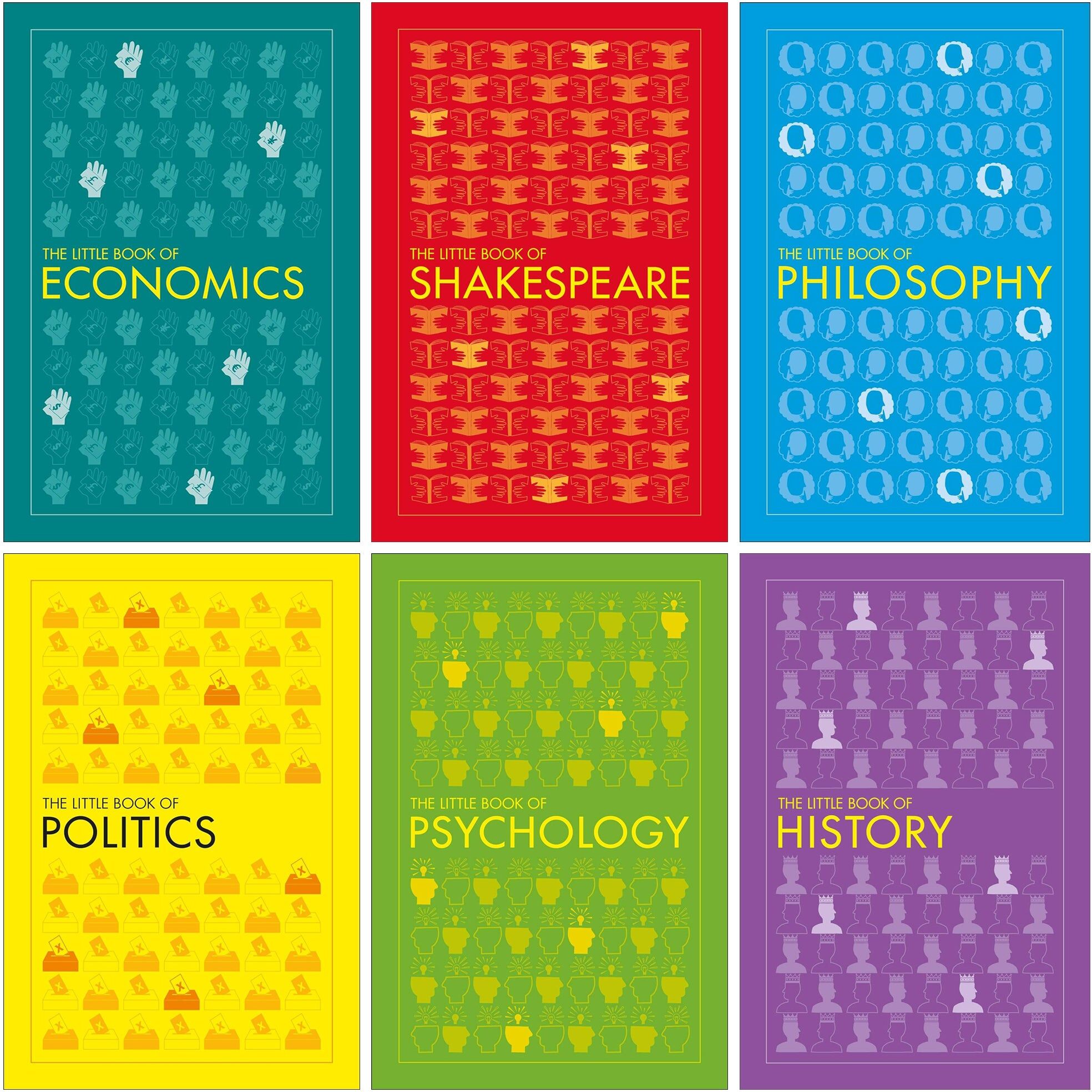
DK The Little Book Of Series 6 Books Collection Set (Economics, Politics, Shakespeare, Philosophy, Psychology, History)The Little Book Of Economics From the earliest forms of currency to the Industrial Revolution, and from the birth of the stock market to free-market capitalism and globalized trade, The Little Book of Economics brings economic theory and the work of key economists to life. Journeying through centuries of economic thought, it is the perfect pocket-sized guide to the subject. The Little Book Of Politics From the origins of democracy to Machiavelli's cunning statecraft, and from Rousseau's "social contract" to the American Declaration of Independence, Marxist communism, the dawn of populism, and identity politics, The Little Book of Politics examines the philosophies behind the different political beliefs and methods of government used around the world over the course of human history. The Little Book Of Shakespeare This bold book covers every work, from the comedies of Twelfth Night and As You Like It to the tragedies of Julius Caesar and Hamlet, plus lost plays and less well-known works of poetry. Easy-to-understand graphics and illustrations bring the themes, plots, characters and language of Shakespeare to life, including illustrated timelines which offer an at-a-glance summary of the action for each play. With detailed plot summaries and an in-depth analysis of the major characters and themes, this is a brilliant, innovative exploration of the entire canon of Shakespeare plays, sonnets and poetry. The Little Book Of Philosophy To the complete novice learning about philosophy can be daunting - The Little Book of Philosophy changes all that. With the use of powerful and easy-to-follow images, famous quotations, and explanations that are easily understandable, this book cuts through any misunderstandings to demystify the subject. The Little Book Of Psychology DK's The Little Book of Psychology answers all these questions and provides an insight into this fascinating field of science. Whether you are a student, an expert, a novice, or have a general interest in the human mind, this portable guide is the perfect choice to start exploring and understanding psychology. The Little Book Of History The Little Book of History charts world history from the dawn of civilisation to the modern culture we live in today. From the origins of homo-sapiens to the release of Nelson Mandela, from the French Revolution to the Space Race, The Little Book of History is a stunning exploration of the human timeline up to and including modern Islam, the world wide web, and the global financial crisis.14,99 £*Shipping: 2,99 £Secure redirect to the provider
-
What was the Hardenberg Revolution in a positive sense during the French Revolution?
The Hardenberg Revolution, named after the Prussian reformer Karl August von Hardenberg, was a series of administrative and economic reforms implemented in Prussia during the French Revolution. In a positive sense, the Hardenberg Revolution aimed to modernize and strengthen the Prussian state by centralizing power, streamlining bureaucracy, and promoting economic development. These reforms helped Prussia become more efficient and competitive, laying the foundation for its future industrialization and emergence as a major European power. **
-
Will Russian President Putin restore the Soviet Union?
It is highly unlikely that Russian President Putin will be able to restore the Soviet Union. The Soviet Union collapsed in 1991, and the countries that were part of it have since become independent nations. The geopolitical landscape has also changed significantly since then, and there is little appetite among the former Soviet states to rejoin a centralized union. Additionally, Putin's focus has been on consolidating power within Russia and expanding its influence in the region, rather than reconstituting the Soviet Union. **
-
What is the principle of leadership in history?
The principle of leadership in history is the idea that effective leaders possess certain qualities and traits that enable them to guide and inspire others towards a common goal. Throughout history, successful leaders have demonstrated characteristics such as vision, courage, integrity, and the ability to communicate effectively. They have also shown a willingness to take risks, make difficult decisions, and adapt to changing circumstances. Ultimately, the principle of leadership in history emphasizes the importance of inspiring and motivating others to achieve greatness. **
-
What is the difference between civil society politics and pluralistic society politics?
Civil society politics refers to the participation of non-governmental organizations, community groups, and individuals in the political process to advocate for social change and public policy reform. This type of politics focuses on grassroots activism and often involves issues related to human rights, environmental protection, and social justice. On the other hand, pluralistic society politics refers to the political system in which power is dispersed among various competing interest groups, such as political parties, business organizations, and labor unions. In a pluralistic society, different groups with diverse interests and ideologies compete for influence and power within the political system. The key difference between civil society politics and pluralistic society politics lies in the actors involved and the nature of their engagement in the political process. Civil society politics emphasizes the role of non-state actors in advocating for social change, while pluralistic society politics focuses on the competition and negotiation among various interest groups within the political system. **
Should civil servants be excluded from leadership positions in disaster management?
No, civil servants should not be excluded from leadership positions in disaster management. Civil servants often have the necessary expertise, experience, and knowledge of government systems to effectively lead disaster management efforts. Their understanding of bureaucratic processes, resource allocation, and interagency coordination can be crucial in effectively responding to and managing disasters. Additionally, civil servants are often dedicated public servants who have a deep commitment to serving their communities, making them well-suited for leadership roles in disaster management. Excluding them from such positions could limit the effectiveness of disaster response efforts. **
What is the history of the MSA president?
The history of the MSA president varies depending on the specific university or institution. Generally, the MSA president is a student leader elected by the members of the Muslim Student Association to represent the interests and needs of the Muslim student community on campus. The president typically works to organize events, advocate for the rights of Muslim students, and promote interfaith dialogue and understanding. The role of the MSA president has evolved over time to address the changing needs and concerns of Muslim students on college campuses. **
Top-Angebote
Products related to Hardenberg:
-
PRESIDENT AMMI121 AerialProduct line: MARYLAND; Resistor [ohm]: 50; Frequency range from [Hz]: 26; Frequency range to [Hz]: 28; Features: vertically polarized, +5 dBi; Power [W]: 500 ; Frequency Range [kHz]: 2000 ; Length [mm]: 1550; Bore Diameter from [mm]: 13; Bore Diameter up to [mm]: 16; Material: Stainless Steel83,99 £*Shipping: 8,45 £Secure redirect to the provider
-
The Hundred Years' War on Palestine by Rashid Khalidi - Paperback - History & Politics - NYT Bestseller - Profile BooksThis is a brand new paperback edition of Rashid Khalidi's landmark history of the Palestinian struggle, The Hundred Years' War on Palestine. The book reframes the conflict as a settler-colonial war waged against the Palestinian people, rather than a simple clash between two equal nationalisms. It is a deeply researched account of the roots of the conflict, drawing on rigorous scholarship, family archives, and personal memory. The book is divided into six defining episodes from 1917 to the present day, including the Balfour Declaration, the Great Revolt of the 1930s, the Nakba of 1948, the 1967 occupation, the Lebanon war of 1982, and the failure of the Oslo peace process. It has been shortlisted for the Cundill History Prize and is a New York Times bestseller.12,99 £*Shipping: 2,99 £Secure redirect to the provider
-
DK The Little Book Of Series 6 Books Collection Set (Economics, Politics, Shakespeare, Philosophy, Psychology, History)The Little Book Of Economics From the earliest forms of currency to the Industrial Revolution, and from the birth of the stock market to free-market capitalism and globalized trade, The Little Book of Economics brings economic theory and the work of key economists to life. Journeying through centuries of economic thought, it is the perfect pocket-sized guide to the subject. The Little Book Of Politics From the origins of democracy to Machiavelli's cunning statecraft, and from Rousseau's "social contract" to the American Declaration of Independence, Marxist communism, the dawn of populism, and identity politics, The Little Book of Politics examines the philosophies behind the different political beliefs and methods of government used around the world over the course of human history. The Little Book Of Shakespeare This bold book covers every work, from the comedies of Twelfth Night and As You Like It to the tragedies of Julius Caesar and Hamlet, plus lost plays and less well-known works of poetry. Easy-to-understand graphics and illustrations bring the themes, plots, characters and language of Shakespeare to life, including illustrated timelines which offer an at-a-glance summary of the action for each play. With detailed plot summaries and an in-depth analysis of the major characters and themes, this is a brilliant, innovative exploration of the entire canon of Shakespeare plays, sonnets and poetry. The Little Book Of Philosophy To the complete novice learning about philosophy can be daunting - The Little Book of Philosophy changes all that. With the use of powerful and easy-to-follow images, famous quotations, and explanations that are easily understandable, this book cuts through any misunderstandings to demystify the subject. The Little Book Of Psychology DK's The Little Book of Psychology answers all these questions and provides an insight into this fascinating field of science. Whether you are a student, an expert, a novice, or have a general interest in the human mind, this portable guide is the perfect choice to start exploring and understanding psychology. The Little Book Of History The Little Book of History charts world history from the dawn of civilisation to the modern culture we live in today. From the origins of homo-sapiens to the release of Nelson Mandela, from the French Revolution to the Space Race, The Little Book of History is a stunning exploration of the human timeline up to and including modern Islam, the world wide web, and the global financial crisis.14,99 £*Shipping: 2,99 £Secure redirect to the provider
-
What is the Rigaer Denkschrift Hardenberg?
The Rigaer Denkschrift Hardenberg is a document written by Friedrich von Hardenberg, also known as Novalis, a German poet and philosopher. It was written in 1799 during his time in Riga, Latvia, and it is considered one of his most important works. The document is a collection of thoughts and reflections on various topics such as philosophy, religion, and literature, and it showcases Novalis' deep intellectual and spiritual insights. The Rigaer Denkschrift Hardenberg is significant in understanding Novalis' philosophical ideas and his contribution to German Romanticism. **
-
Why is Georg Philipp Friedrich von Hardenberg called Novalis?
Georg Philipp Friedrich von Hardenberg is called Novalis because it was his pen name, which he used for his literary works. The name "Novalis" is derived from the Latin word "novus," meaning "new," and reflects his interest in romanticism and the exploration of new ideas and emotions in his writing. Hardenberg adopted this pseudonym to separate his literary identity from his personal life and to signify a fresh start in his creative endeavors. **
-
What was the Hardenberg Revolution in a positive sense during the French Revolution?
The Hardenberg Revolution, named after the Prussian reformer Karl August von Hardenberg, was a series of administrative and economic reforms implemented in Prussia during the French Revolution. In a positive sense, the Hardenberg Revolution aimed to modernize and strengthen the Prussian state by centralizing power, streamlining bureaucracy, and promoting economic development. These reforms helped Prussia become more efficient and competitive, laying the foundation for its future industrialization and emergence as a major European power. **
-
Will Russian President Putin restore the Soviet Union?
It is highly unlikely that Russian President Putin will be able to restore the Soviet Union. The Soviet Union collapsed in 1991, and the countries that were part of it have since become independent nations. The geopolitical landscape has also changed significantly since then, and there is little appetite among the former Soviet states to rejoin a centralized union. Additionally, Putin's focus has been on consolidating power within Russia and expanding its influence in the region, rather than reconstituting the Soviet Union. **
Similar search terms for Hardenberg
-
What is the principle of leadership in history?
The principle of leadership in history is the idea that effective leaders possess certain qualities and traits that enable them to guide and inspire others towards a common goal. Throughout history, successful leaders have demonstrated characteristics such as vision, courage, integrity, and the ability to communicate effectively. They have also shown a willingness to take risks, make difficult decisions, and adapt to changing circumstances. Ultimately, the principle of leadership in history emphasizes the importance of inspiring and motivating others to achieve greatness. **
-
What is the difference between civil society politics and pluralistic society politics?
Civil society politics refers to the participation of non-governmental organizations, community groups, and individuals in the political process to advocate for social change and public policy reform. This type of politics focuses on grassroots activism and often involves issues related to human rights, environmental protection, and social justice. On the other hand, pluralistic society politics refers to the political system in which power is dispersed among various competing interest groups, such as political parties, business organizations, and labor unions. In a pluralistic society, different groups with diverse interests and ideologies compete for influence and power within the political system. The key difference between civil society politics and pluralistic society politics lies in the actors involved and the nature of their engagement in the political process. Civil society politics emphasizes the role of non-state actors in advocating for social change, while pluralistic society politics focuses on the competition and negotiation among various interest groups within the political system. **
-
Should civil servants be excluded from leadership positions in disaster management?
No, civil servants should not be excluded from leadership positions in disaster management. Civil servants often have the necessary expertise, experience, and knowledge of government systems to effectively lead disaster management efforts. Their understanding of bureaucratic processes, resource allocation, and interagency coordination can be crucial in effectively responding to and managing disasters. Additionally, civil servants are often dedicated public servants who have a deep commitment to serving their communities, making them well-suited for leadership roles in disaster management. Excluding them from such positions could limit the effectiveness of disaster response efforts. **
-
What is the history of the MSA president?
The history of the MSA president varies depending on the specific university or institution. Generally, the MSA president is a student leader elected by the members of the Muslim Student Association to represent the interests and needs of the Muslim student community on campus. The president typically works to organize events, advocate for the rights of Muslim students, and promote interfaith dialogue and understanding. The role of the MSA president has evolved over time to address the changing needs and concerns of Muslim students on college campuses. **
* All prices are inclusive of VAT and, if applicable, plus shipping costs. The offer information is based on the details provided by the respective shop and is updated through automated processes. Real-time updates do not occur, so deviations can occur in individual cases. ** Note: Parts of this content were created by AI.